

If you’ve got a completely stock 2016 Toyota Tacoma and you want the best suspension and tire package for under $5,000 USD, this is the combo I’d point you toward every time.
There are more expensive ways to build a Tacoma. There are flashier ways too. But if the goal is real performance, reliable parts, better ride quality, better off-road capability, and no wasted money, this setup hits an incredibly sweet spot.
The truck started bone stock. The plan was simple: strip out the factory suspension, fix a couple of known Tacoma weak points while we’re in there, then install a package that gives you the best value-to-performance ratio on the market.
What this Tacoma build is trying to accomplish?
This is not a max-effort long-travel truck. It’s not a “throw every catalog part at it” build either.
This is a budget-conscious Tacoma suspension build designed for people who want:
- A noticeable improvement on and off road
- A reliable setup that doesn’t need constant babysitting
- A truck that looks right, sits right, and rides right
- Bigger tires for people who don’t want to modify their frame
- Strong performance per dollar spent
That’s the whole point of this package. No hype. No trend-chasing. Just really solid parts that work.
Build Preparation: Why start with a clean slate?
The first step we took was tearing the Tacoma down and pulling all the stock suspension components out so we could start fresh. Up front, that meant removing the factory coilovers, sway bar, and related hardware. Out back, it meant pulling the leaf packs and shocks and getting ready for the new setup.
On an older truck, this is usually the point where seized bolts start reminding you who’s in charge. U-bolts often get cut off rather than fought with, and suspension hardware can go either way. Sometimes it comes apart clean. Sometimes one cam bolt sleeve decides it’s never leaving.
Once the stock stuff is out, you can build the truck properly instead of stacking new parts on tired factory components.

The Critical ECGS Bushing Upgrade
Before going any further, you need to consider replacing the stock needle bearing with an ECGS bushing. This is one of those “do it now while you’re in there” upgrades on a lifted Tacoma.
Here’s the issue. On the front differential, driver side only, there’s a needle bearing that the CV rides on. Once you lift the truck, some Tacomas develop a front-end vibration. A classic sign of this issue is the following:
- The truck vibrates in two-wheel drive
- The vibration disappears when you put it in four-wheel drive
When that happens, the driver-side needle bearing is usually the culprit.
The fix is replacing that needle bearing with the ECGS bushing from East Coast Gear Supply. It’s one of those upgrades that saves a ton of guesswork later. Because the problem is inconsistent, a lot of people roll the dice and wait to see if the vibration appears after the lift. Personally, it makes way more sense to just install the bushing proactively and never worry about it.
How the ECGS bushing install works
The process is straightforward once the front end is apart:
- Remove the axle nut and free the CV from the hub.
- Pull the CV out of the differential.
- Catch the small amount of diff oil that drains out.
- Use the ECGS bearing puller tool to remove the factory needle bearing.
- Install the new bushing with the correct orientation.
- Reinstall the CV and refill the differential oil.
A couple of details matter here.
First, the ECGS puller tool works well, but sometimes the edge needs to be shaved slightly so it slips in behind the bearing more easily. Second, the bushing has an inside and an outside. The bushing material is on the inside, and the steel sleeve is on the outside. When driving it in, the steel section should face outward.
Installed properly, it sits basically flush with the surrounding metal. Once that’s done, the CV goes back in, the diff gets topped off, and you’ve eliminated one of the most common Tacoma lift headaches before it even starts.
If the truck already has something like an ARB locker, there may already be a bushing in that location, so it’s worth checking before ordering parts.
Bulletproofing the Alignment: Cam Tab Welding
While the suspension was off, we also welded the cam tabs.
This is one of those upgrades that people debate online forever, but in the real world it’s simple: cam tabs bend. They bend on old trucks, and they bend on surprisingly new trucks too.
The alignment cams on the lower control arms rely on those tabs to hold alignment. In theory, everything is clamped by friction when torqued properly. That’s true. The problem is what happens when you hit something hard enough to overcome that friction. Then the load goes straight into the tab.
Once the tab folds or distorts, your alignment can shift and now you’ve got a mess.
Welding a bead behind the tabs reinforces them so they’re much less likely to fold over under impact. It’s a simple, affordable durability mod, and for a Tacoma that’s actually going to see rough roads or trail use, it’s absolutely worth doing.
Now, if you want something a little stronger than welding a bead behind the tabs and are willing to spend a few more bucks, then the Total Chaos Cam Tab Gussets are going to be your best bet.
Front Suspension: Performance Meets Value with Bilstein 6112s
For the front of this build, the choice was the Bilstein 6112, and honestly, this is where the whole value argument really comes together.
The 6112 is physically much larger than the factory shock, and that matters for a few reasons.
Bigger piston, better damping control
A larger piston gives you more room for more sensitive valving. In simple terms, the shock can react better and control motion more effectively than a small stock unit.
More oil volume means less fade
This is huge. Shocks fade as they get hot. Once they heat up, performance drops and the truck starts feeling bouncy and underdamped. Because the 6112 carries more oil, it resists heat fade much better than the factory suspension.
That’s a big reason these feel so good when the pace picks up or the road gets rough for long stretches.
Adjustable ride height
The 6112 uses a snap-ring style adjustable perch. Move the clip, change the spring seat height, and you change preload. More preload equals more lift.
For this Tacoma, the front shocks were set to pair properly with the rear Deaver Stage 1 leaf springs, which provide around 2 inches of lift. The truck already had about an inch of factory rake, and the goal was to reduce that slightly without going dead-level in a weird way.
You can correct Taco lean
Anyone who has spent time around Tacomas knows about the classic driver-side lean. The gas tank, battery, and driver are all on the same side, so the truck tends to sit lower there.
The nice thing with the 6112 setup is you can account for that by setting the passenger side a couple of clips lower than the driver side. That adds a little extra preload to the driver side and helps the truck sit level.
Use new top hats, not crusty old ones
One of the reasons the 6112 stays reasonably budget friendly is that it doesn’t come preassembled with a top hat. You can reuse the stock top hats, but on a lot of trucks they’re already tired, rusty, or just not worth the hassle.
A much better move is using new top hats and assembling the front coilovers with all fresh components. It saves frustration, gives you fresh bushings, and makes the install cleaner overall.
Real-world performance matters more than brochure specs
The reason I like this setup isn’t because it sounds good on paper. It’s because we’ve actually tested it hard.
We’ve jumped these shocks. We’ve hit whoops with them. We’ve run them on a third gen Tacoma in exactly the kind of conditions that expose weak suspension quickly. The Bilstein 6112s flat-out perform.
Compared with other options in the same category, they land in a really strong place for price versus results. There may be other shocks that edge them out in one area or another, but once you factor in durability, cost, and the lack of recurring issues, the 6112s are extremely difficult to beat.
Rear Suspension: Longevity and Ride Quality with Deaver Stage 1 Leaf Springs & Bilstein 5160s
Out back, the truck got Deaver Stage 1 leaf packs, and this is another part of the build where spending money in the right place makes all the difference.
There are a few reasons Deaver leaf springs stand out.
More leaves, smoother spring progression
If you look at a Deaver pack, one thing jumps out right away: there are a lot of leaves in it.
That’s not just for show. More, thinner leaves generally flex better and provide a smoother progression through the travel. Instead of a few thick leaves with larger steps in spring rate as the pack compresses, you get a more gradual transition.
The result is a rear suspension that feels smoother and more composed both unloaded and while moving through rough terrain.
Good construction details matter
The packs are wrapped properly, and they use poly bushings that don’t tend to squeak like some other options.
That may sound minor until you’ve lived with a noisy leaf pack. At that point, “doesn’t squeak like crazy” becomes a pretty compelling feature.
Why Deaver over Old Man Emu leaf springs?
One of the criticisms here was specifically aimed at OME rear leaves. The issue is that the second leaf can be too long and too wide in a way that contacts the shackle during cycling. Over time, that can chew into the shackle badly. Add the squeaking issue and it becomes a setup I’m not especially excited about on these trucks.
If Deaver is out of budget, there are still good alternatives. Icon and Dobinsons leaf packs were both called out as solid options. But if I’m choosing personally, Deaver gets the nod.
Which Deaver stage should you actually buy?
This is where a lot of people overbuild the truck.
- Stage 1: about 2 inches of lift, ideal for lighter setups
- Stage 2: for moderate added weight, like a canopy and drawer system
- Stage 3: for seriously heavy loads, like a camper
A lot of Tacoma owners jump straight to Stage 3 because they assume any overland gear means they need the heaviest option. Usually they don’t. A canopy and drawers alone are not enough to justify Stage 3. If your truck is relatively light, Stage 1 is the right call. If it carries moderate permanent weight, Stage 2 makes more sense. Save Stage 3 for truly heavy builds.
Rear shocks: Keep cool with Bilstein 5160s
To match the rear leaf pack, the truck got Bilstein 5160 reservoir shocks.
These make a lot of sense on a build like this for a few reasons:
- They have a durable coating that holds up well in the Pacific Northwest and other harsh climates
- They’re roughly three-quarters of an inch longer than stock, which helps take advantage of the added rear suspension travel
- The remote reservoir adds oil volume and cooling capacity
That extra oil volume helps with heat management the same way it does up front. Better cooling means more consistent damping when the road gets ugly or the truck is working hard for extended periods.
Tire Selection & Alignment: The 32.5" vs. 33" Trade-Off
Tire size can make or break a Tacoma build, especially if you’re trying to stay on budget.
A lot of people immediately jump to 33s, and there’s nothing wrong with that. But once you do, you usually open the door to extra work like a cab mount chop and additional trimming. That means more time, more money, and more complexity.
For this truck, the choice was Falken Wildpeak AT4W 275/70R17, which lands around 32.5 inches.
That’s a really smart middle ground.
- It gives the truck a larger, more capable tire
- It usually avoids the extra fabrication typically needed for 33s
- It keeps the build more street friendly
- It still looks right on the truck
If your priority is more aggressive wheeling and you don’t care as much about fuel economy or extra fabrication, then sure, step up to a 33 and do the cab mount chop. But if you want a great tire that usually fits cleanly and keeps costs under control, the Wildpeaks are a killer option.
Once everything is put together, it’s always prudent to get a professional alignment, which we did on this 3rd Gen.

Why this package is the best value-to-performance Tacoma build
What makes this build so good is not just that every part is decent. It’s that the parts work together.
You’ve got:
- Bilstein 6112s up front for improved damping, heat resistance, and adjustable lift
- Deaver Stage 1 Leaf Springs in the rear for smoother spring progression and about 2 inches of lift
- Bilstein 5160s out back for more travel and better cooling
- Falken Wildpeak AT4W 275/70R17 tires for a clean fit without moving into full on cab mount chop territory
- ECGS bushing and welded cam tabs as preventative upgrades that solve known Tacoma issues
That combination gives you a truck that rides better, handles rough terrain better, sits better, and avoids a bunch of common post-lift annoyances.
And most importantly, it does all of that while staying under the budget target.
Who this build is perfect for?
This Tacoma suspension and tire package makes the most sense for someone who wants a truck that can do a bit of everything.
It’s ideal if you want:
- A daily driver that doesn’t feel wrecked by bad suspension choices
- An overland or adventure setup that still drives properly on pavement
- A truck that can handle rough roads, trail use, and occasional harder hits
- A practical build that avoids unnecessary fabrication costs
It’s less ideal if your whole goal is building a dedicated crawler or a high-speed desert truck. But that’s not what this package is trying to be. This is the sweet spot build. That’s why it works.
The final result
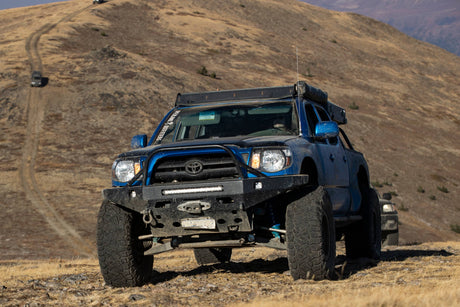
Once everything was assembled, aligned, and rolled outside, the result was exactly what this kind of build should be: a Tacoma that looks right, sits right, and delivers a huge jump in performance without blowing the budget.
That’s the whole reason to call this the best bang-for-buck Tacoma build under $5K. It isn’t about the biggest lift or the most expensive nameplate. It’s about getting the most out of your money and ending up with a truck that genuinely drives and performs better in the real world.
If that’s the goal, this is an incredibly hard package to beat.







1 comment
I just read your blog on the ultimate 3rd gen upgrade.is this still under 5000 and can it be done with Toyo at3s?